Natural, laboratory-grown, and imitation gemstones are not interchangeable descriptions. A lab-grown sapphire is real sapphire produced in a laboratory; a blue glass imitation is not sapphire at all. Meanwhile, a natural sapphire can still have been heated to improve its appearance. Learning the difference protects buyers from misleading labels, unrealistic price comparisons, and unsuitable jewelry choices.
This guide explains the four most useful categories—natural, laboratory-grown, treated, and imitation—with practical purchasing examples and questions to ask a seller.
Natural vs lab-grown vs imitation gemstones: comparison chart
| Category | What it means | Example | What to confirm |
|---|---|---|---|
| Natural gemstone | Formed by geological processes without human manufacture | Natural ruby or sapphire | Identification, known treatments, and origin claims |
| Laboratory-grown gemstone | Human-produced material with essentially the same chemistry and crystal structure as a natural counterpart | Lab-grown ruby, sapphire, or diamond | Clear disclosure of lab-grown origin |
| Treated gemstone | Natural or lab-grown material altered by a treatment such as heating, irradiation, or filling | Heated natural sapphire | Which treatments were applied and care implications |
| Imitation (simulant) | A different material that resembles the gem named in marketing | Cubic zirconia imitating diamond | The material’s actual identity |
These categories may overlap: for example, a natural heated sapphire is both natural and treated. Likewise, an imitation may be natural or manufactured material being sold to resemble another gem.
What is a natural gemstone?
A natural gemstone originates in nature. Mining, cutting, and polishing do not turn it into a synthetic stone. However, the word “natural” does not automatically mean untreated, rare, valuable, or ethically sourced. Two natural gems of the same type may differ dramatically in transparency, color, inclusions, and commercial value.
For colored gemstones, treatments such as heating may affect appearance and price. Buyers should ask about both natural origin and treatment history, because those address separate questions.
What is a lab-grown gemstone?
A laboratory-grown gemstone is produced through human-controlled processes that form material with essentially the same fundamental mineral identity as the natural variety. Lab-grown corundum is corundum; when red, it may be laboratory-grown ruby, and when an appropriate other color, laboratory-grown sapphire.
Laboratory-grown gems can be beautiful, durable jewelry stones. They are not automatically poor-quality products. Their market value and rarity profile often differ from comparable natural stones, however, and their origin must be clearly disclosed.
Is a lab-grown diamond a real diamond?
Yes. Laboratory-grown diamonds have essentially the same carbon crystal structure and major physical properties as natural diamonds. They are different from cubic zirconia and moissanite, which can resemble diamond but are distinct materials. Sophisticated testing may be needed to distinguish natural and laboratory-grown diamonds.
Is synthetic ruby just glass?
No. Properly described synthetic ruby is laboratory-produced ruby (red corundum), not ordinary glass. If a red glass stone is described as synthetic ruby, that description is misleading.
What are imitation or simulated gemstones?
An imitation is a look-alike made from another substance. A colorless cubic zirconia stone can imitate the appearance of diamond without having the same composition. Glass can imitate sapphire, emerald, opal, or many other gems. Dyed stone can also be marketed to resemble turquoise or other materials.
An imitation can still be attractive for fashion jewelry; the concern is inaccurate product identification or a price that assumes the imitated material is genuine.
How do treatments change a gemstone?
Treatments are different from laboratory growth. Common examples include heating to change or improve color, fracture filling to change apparent clarity, dyeing to add color, and irradiation to alter color in certain materials. The effects, durability, and care considerations depend on the actual gem and treatment.
Some treatments are widely accepted in the gem trade; others may substantially alter value or require special cleaning precautions. Ask whether a treatment is permanent or sensitive to heat, light, chemicals, or ultrasonic cleaning. A seller should disclose known treatments accurately rather than use the vague word “enhanced” as a substitute for details.
How can professionals distinguish natural from laboratory-grown gemstones?
Natural and laboratory-grown gems may share chemical and optical properties, so simple home tests are not decisive. Trained gemologists examine growth structures, inclusions, spectroscopy results, fluorescence reactions, and other characteristics depending on the species. Advanced laboratory instruments may be required.
Inclusions do not conclusively prove natural origin: synthetic gems can also contain inclusions and growth features. Likewise, exceptional clarity is not proof of laboratory origin. Color and price are clues at best.
The Gemological Institute of America explains how its laboratories analyze colored stones. For higher-value transactions, request an independent identification report appropriate to the stone and verify the report with its issuer.
Real-world buying examples
Example 1: A sapphire engagement ring
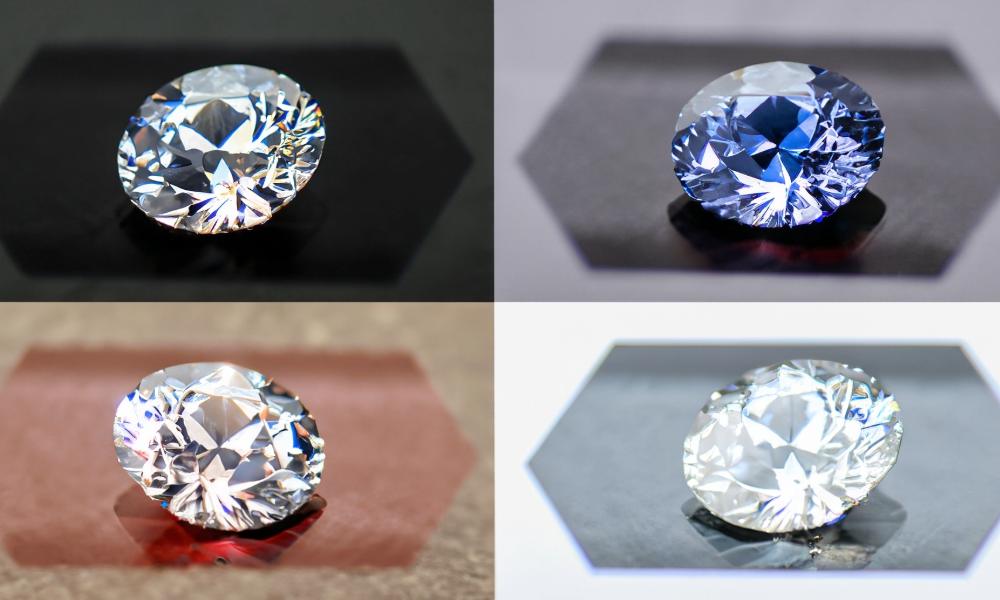
Two attractive blue sapphires may look nearly identical in seller photographs. One might be natural and heated; another may be laboratory-grown. Both can be sapphire, but origin and treatment disclosures affect how a buyer evaluates them. Read our existing white sapphire vs diamond comparison for another example of how look-alike stones differ.
Example 2: A diamond alternative
Diamond, lab-grown diamond, moissanite, and cubic zirconia should be named distinctly. Some provide a visually similar appearance at different price points; none should be misrepresented as a different material. Consider durability, replacement cost, setting, and long-term maintenance rather than photographs alone.
Example 3: A turquoise pendant
Turquoise jewelry can involve untreated turquoise, stabilized turquoise, dyed turquoise, composite material, or dyed imitation stones. Ask what the material actually is and whether stabilization or dyeing occurred. Our white buffalo turquoise guide also illustrates why trade names require careful interpretation.
What affects the price of natural vs lab-grown stones?
Price is influenced by supply, demand, color, size, clarity, cut, provenance, treatment, market trends, and retail conditions. Natural origin can command a premium in certain gem categories, but it does not guarantee investment value. Laboratory-grown prices also change over time, so published price-per-carat figures can become obsolete quickly.
Instead of relying on a single generic price chart, compare stones with documented identity, dimensions, optical quality, treatment disclosures, and seller return terms. The cheapest option is not necessarily suitable for a ring worn every day, and the costliest is not automatically superior.
Seven questions to ask before buying a gemstone
- What is the exact gem species or variety?
- Is it natural, laboratory-grown, or an imitation of another material?
- Has it been heated, dyed, filled, irradiated, or otherwise treated?
- Is that treatment stable and are there special care requirements?
- Is the origin supported by an independent laboratory report?
- Does the report number match the specimen and the issuing laboratory’s database?
- What are the return policy, warranty, and written disclosure terms?
Natural vs synthetic gemstones: common myths
Myth: Synthetic always means fake. In gemology, “synthetic” generally indicates human-created material corresponding to a natural gem species. It is not equivalent to a glass imitation.
Myth: Every natural gem is untreated. Natural stones may have undergone enhancements after mining.
Myth: A clear stone must be lab-grown. Clarity alone does not determine growth origin.
Myth: A scratch test proves whether a gem is real. Scratch tests may permanently damage jewelry and rarely answer the complete identification question.
Frequently asked questions
Are laboratory-grown gemstones genuine gemstones?
Yes, when they have the corresponding gem’s composition and crystal structure. Their laboratory-grown origin must still be disclosed.
What is the difference between synthetic and simulated stones?
Synthetic means laboratory-produced material corresponding to a natural mineral species; simulated means another material resembling it.
Is a heated natural sapphire still natural?
Yes. Heating is a treatment applied after the sapphire formed naturally.
Can I identify a synthetic gemstone at home?
You may notice clues, but reliable identification often requires specialist equipment and training. Do not rely on destructive home tests.
Should I avoid all treated gemstones?
Not necessarily. The important questions are accurate disclosure, durability, care, and whether the price fairly reflects treatment.
Sources and further reading
- GIA: How colored stones are analyzed
- GIA: Colored stone reports
- US Federal Trade Commission: Jewelry Guides
Gemstone descriptions and treatments should be assessed for the individual specimen. This guide provides consumer education, not a laboratory identification or appraisal.