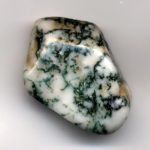
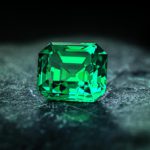
Garnet is not a single red gemstone. It is a family of related silicate minerals that occur in red, orange, pink, violet, yellow and green varieties. Different garnet species and mixtures explain why one specimen may resemble ruby while another looks like vivid green emerald.
Almandine and pyrope
Almandine often contributes dark red to purplish-red coloration; pyrope is associated with rich red hues. Many commercially important garnets represent compositional mixtures rather than single perfect end members. They can resemble ruby to casual observers, but ruby belongs to the corundum family. Mineral identity should be confirmed by gemological testing instead of color alone.
Spessartine and its orange hues
Spessartine is frequently associated with orange to reddish-orange garnets. Brilliant color can be attractive, but dark areas or poor cutting may limit the final appearance. Commercial terms sometimes emphasize saturated orange tones without identifying the actual species. Ask for documented gemstone identity and evaluate clarity and size.
Grossular: hessonite and tsavorite
Grossular covers multiple color varieties, including green tsavorite and orange-brown hessonite. Tsavorite is prized for lively green color, while hessonite is often associated with warmer hues and distinctive inclusions. Both are garnets, but they should not be assumed equivalent in price. Color, cut and market demand vary by variety.
Andradite and uvarovite
Andradite includes the gem variety demantoid, which is valued in fine specimens for its bright green color and optical dispersion. Uvarovite commonly occurs as small green crystals in drusy aggregates, rather than large faceted stones. Not every green garnet is tsavorite, and species-level claims can be important for valuable specimens.
Rhodolite and color-change garnets
Rhodolite is a common trade variety name associated with pinkish-purple to purplish-red garnets, generally in the pyrope-almandine series. Some garnets exhibit color change under different lighting, but such claims require observation under appropriate illumination. Photographing a stone with colored lights does not prove a true mineralogical color-change phenomenon.
Buying and caring for garnet
Garnets are often around Mohs 6.5 to 7.5, depending on their composition, and many suit earrings, pendants and carefully worn rings. Surface-reaching inclusions or vulnerable cutting can affect longevity. Seek clarity about species, treatment, natural origin and reports for higher-value garnets. Keep stones separate from harder gems and avoid impact.
Practical buyer checklist
- Confirm the exact gemstone species or material, not just a color or trade nickname.
- Ask whether the item is natural, laboratory-grown, treated or assembled.
- Inspect the condition, size and treatment disclosures.
- Seek independent laboratory verification when significant value depends on identification.
- Check the return and cleaning policies before purchase.
Frequently asked questions
Can a photo alone prove this gemstone’s identity?
No. Different minerals and imitations can look similar, particularly after cutting and polishing.
Does natural mean untreated?
No. Some naturally formed gems are dyed, heated, filled or otherwise modified.
Is a scratch test safe for home identification?
No. Deliberate scratching can permanently damage valuable stones or settings and does not resolve many origin questions.
Explore related articles
References
Educational guidance, not an appraisal, medical claim or laboratory assessment.