Updated November 2026
Quick answer: At home, check the setting stamp, look at the sparkle (diamond flashes bright white with some color; CZ shows lots of rainbow; white sapphire looks silvery), try the fog test, and use a 10x loupe to look for natural inclusions and sharp facet edges. For a reliable answer, use a diamond tester (which separates diamond from CZ, white sapphire and glass), a multi-tester (which also catches moissanite) and, for valuable stones, a gemologist or lab report. No home test can tell a lab-grown diamond from a natural one.
Diamond look-alikes include cubic zirconia, moissanite, white sapphire, white topaz and glass. This guide shows which tests actually separate them.
At-Home Tests That Give Useful Clues
1. Check the setting and stamps
Real diamonds are usually set in gold (10K, 14K, 18K, 585, 750) or platinum (PT, PLAT, 950). Stamps such as “925” (sterling silver), “GP” or “GF” (gold-plated or filled) or “C.Z.” suggest a simulant. This is a clue, not proof.
2. Look at the sparkle
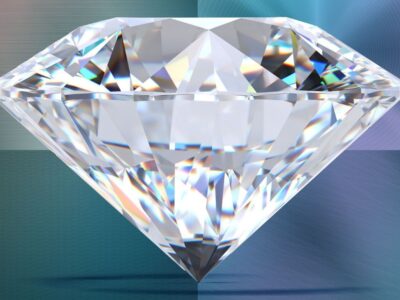
Diamond shows bright white brilliance with balanced flashes of color. CZ and moissanite show stronger rainbow fire; white sapphire and white topaz look softer and glassier, with little color.
3. The fog test
Breathe on the stone. Diamond disperses heat quickly, so fog clears almost instantly; on many simulants it lingers for a second or two. Moissanite also clears fast, and dirt can skew results.
4. Inspect with a 10x loupe
- Inclusions: most natural diamonds have tiny crystals, feathers or clouds. A flawless stone at a low price is suspicious.
- Facet edges: diamond edges are razor-sharp; CZ and glass edges are often rounded or worn.
- Doubling: doubled back facets mean a doubly refractive stone such as moissanite or sapphire. Diamond never shows doubling.
5. The read-through (dot) test
For a loose round brilliant, place it table-down on printed text or a dot. A well-cut diamond bends light so strongly you can’t read through it; you may see the text through glass, white sapphire or white topaz. It doesn’t work on mounted stones or fancy shapes, and moissanite and CZ can also pass.
6. UV fluorescence
Under a UV (black) light, many diamonds glow blue; according to GIA, roughly a quarter to a third show some fluorescence. Absence of glow proves nothing.
7. Weight
CZ is about 70% heavier than diamond. If a loose stone’s measured size and carat weight don’t match diamond proportions, it isn’t diamond.
Tests That Don’t Work (or Damage Your Stone)
- Scratch test: scratching glass or another stone can damage your jewelry, and moissanite, sapphire and topaz also scratch glass.
- Water (sink) test: diamond sinks, but so do CZ, moissanite, sapphire and topaz.
- Heat-and-cold test: heating a stone and dropping it in cold water can crack diamonds with inclusions and destroy simulants.
- Biting: no.
Diamond Testers and Multi-Testers
| Stone | Thermal diamond tester | Multi-tester (thermal + electrical) |
|---|---|---|
| Natural diamond | Diamond | Diamond |
| Lab-grown diamond | Diamond | Diamond |
| Moissanite | Often reads as diamond | Moissanite |
| White sapphire | Not diamond | Not diamond |
| Cubic zirconia | Not diamond | Not diamond |
| White topaz, glass | Not diamond | Not diamond |
Thermal testers are inexpensive and accurate for most simulants. Because moissanite conducts heat almost like diamond, use a multi-tester that also checks electrical conductivity.
How to Spot Each Look-Alike
| Stone | Key clues | Learn more |
|---|---|---|
| Cubic zirconia | Strong rainbow fire, heavy, worn edges, fails tester | CZ vs diamond |
| Moissanite | Very strong fire, doubled facets, passes basic tester | Moissanite vs diamond |
| White sapphire | Soft silvery sparkle, little fire, fails tester | White sapphire vs diamond |
| White topaz | Glassy, low brilliance, fails tester | White topaz vs white sapphire |
| Glass | Bubbles, rounded edges, soft, warms quickly | How to tell if a gemstone is real |
Real vs Lab-Grown Diamond
A lab-grown diamond is a real diamond, so it passes every home test and diamond tester. Only gemological labs with advanced equipment can confirm origin. Check for a laser inscription such as “LG” or “lab-grown” on the girdle and a matching IGI or GIA report. Read lab-grown diamonds explained.
When to See a Professional
For any stone worth more than a few hundred dollars, an inherited ring or a purchase you’re unsure about, visit an independent jeweler or certified gemologist. They can test the stone in minutes. For a definitive identity and grading, send it to a lab such as GIA, IGI or AGS, and verify any report number online. See how to read a gemstone lab report.
FAQs
What is the easiest way to tell if a diamond is real?
Use an inexpensive diamond tester, or a multi-tester if moissanite is possible. At home, look for bright white sparkle, sharp facet edges and natural inclusions with a loupe.
Does a real diamond fog up?
Only briefly. Fog on a real diamond clears almost instantly; it lingers longer on many simulants.
Can a real diamond fail a diamond tester?
Rarely, if the stone or probe is dirty or the tester isn’t calibrated. Clean the stone and retest, or see a jeweler.
Can a jeweler tell if a diamond is lab-grown?
Not by eye. They need specialized equipment or a lab report.
Stay tuned to Gems Tycoon for more gemstone guides.