Quick answer: Opal, opalite and moonstone can all appear milky or iridescent in jewelry photos. They are not interchangeable names. Natural opal is hydrated silica; moonstone is a feldspar gem; the retail label ‘opalite’ often means manufactured glass. Understanding their different optical effects avoids costly labeling mistakes.
Quick gemstone comparison
| Feature | Material A | Material B / context |
|---|---|---|
| Material | Hydrated silica | Feldspar moonstone |
| Typical effect | Play-of-color in precious opal | Floating sheen (adularescence) |
| Common imitation | Glass opalite | Glass or synthetic look-alikes |
| Buying question | Solid, treated or assembled? | Exact feldspar variety? |
Three names, three different materials
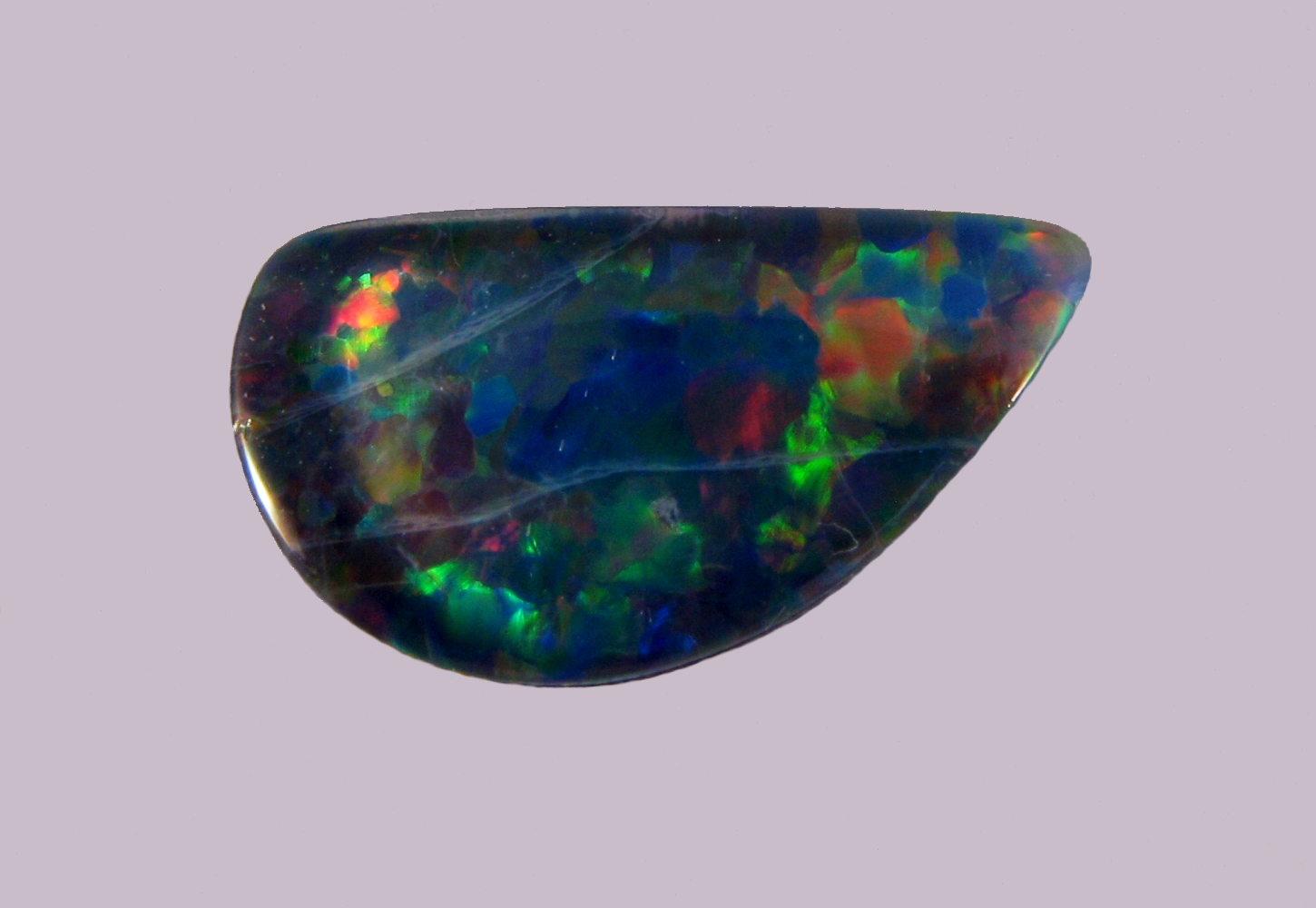
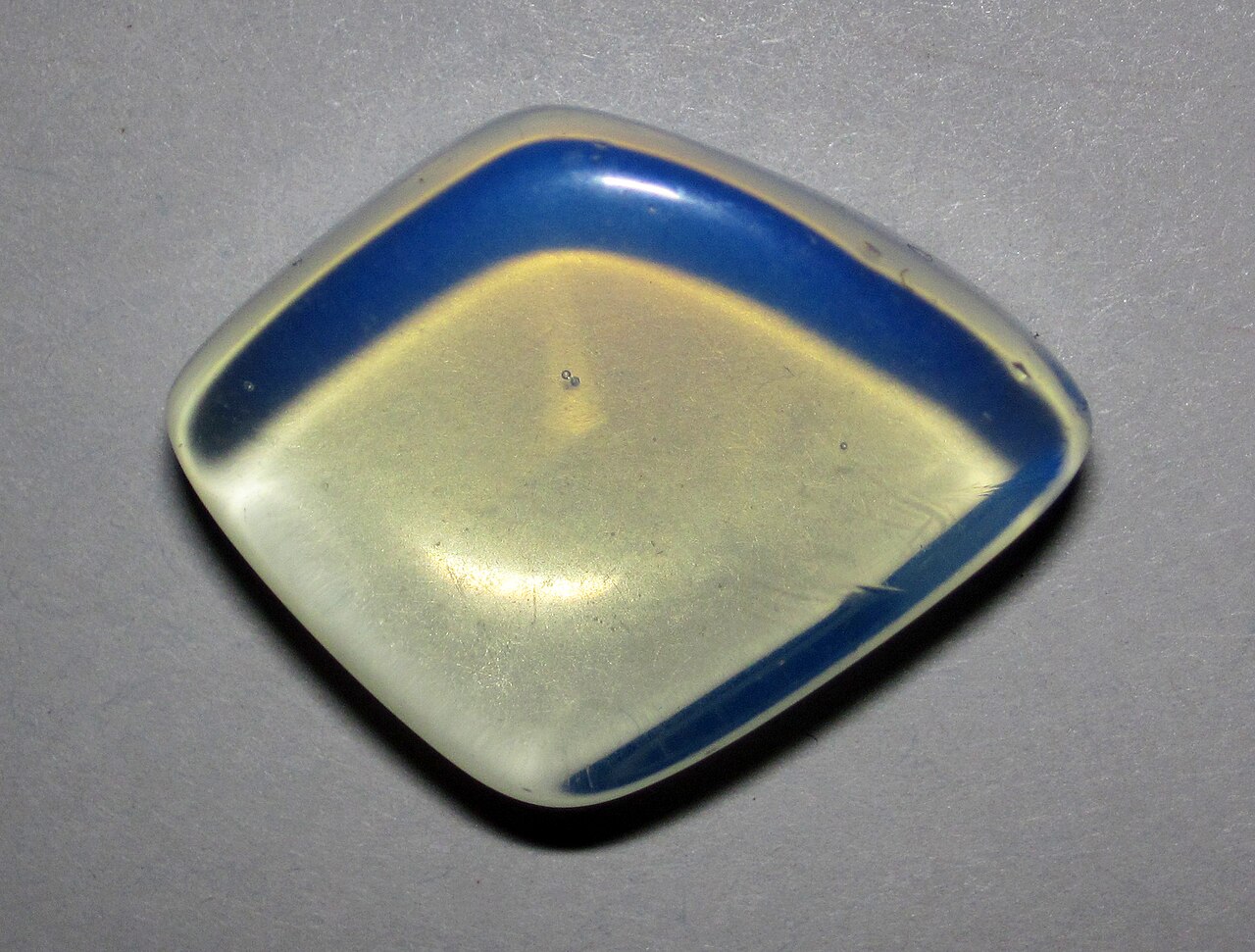
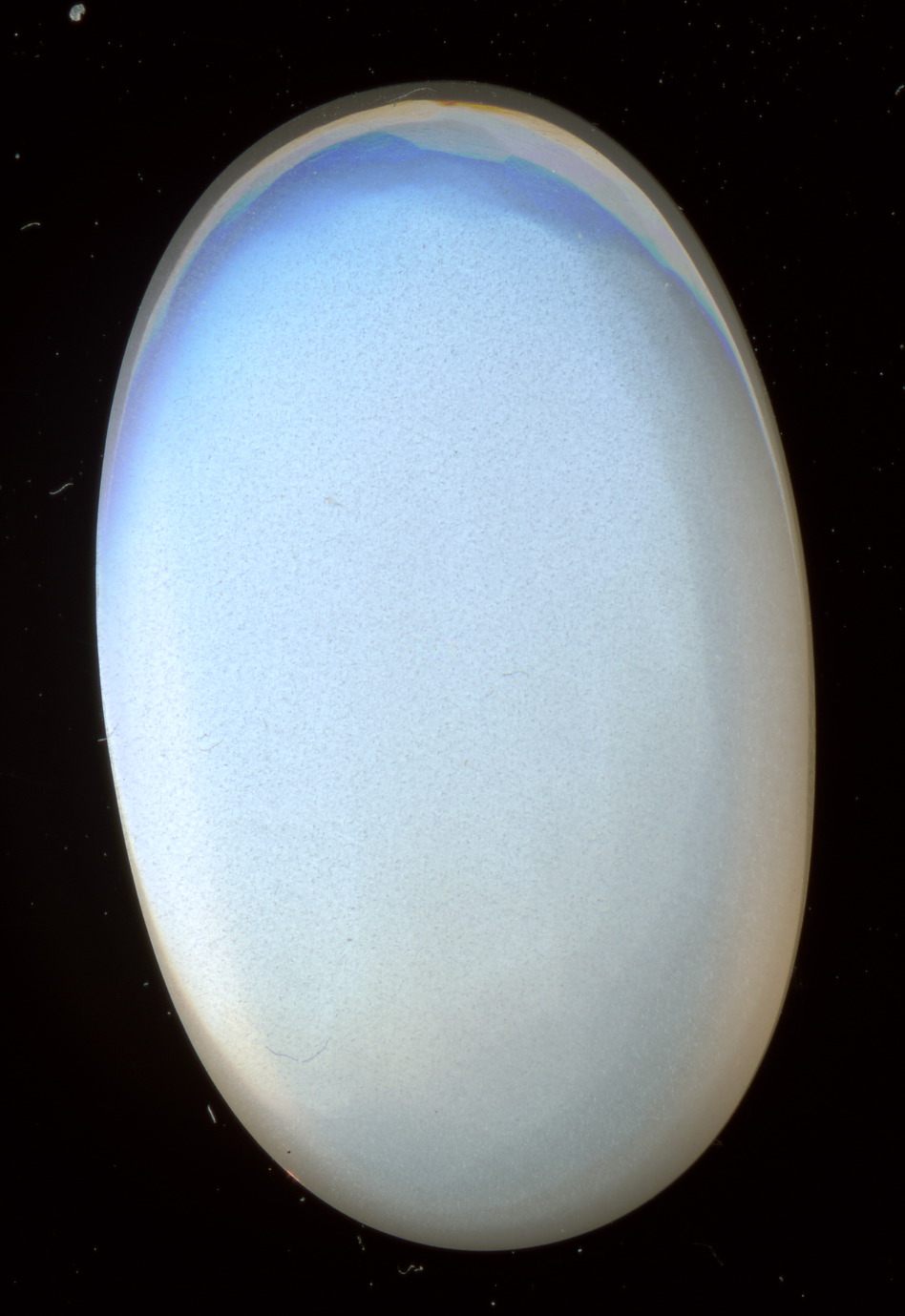
Precious opal is known for play-of-color, caused by its microscopic silica structures. Moonstone, a feldspar, is admired for adularescence—a floating light effect that can resemble a blue sheen. Commercial opalite is frequently an opalescent glass product. Trade usage of ‘opalite’ varies, so always request the actual material specification.
Compare the optical effects
An opal may display distinct moving rainbow patches as the stone rotates. Moonstone more often reveals a softer sheen that appears to glide across the surface. Manufactured opalite can glow warm or bluish against different backgrounds without showing the internal structure of precious opal. Camera light can distort all three; a photograph cannot prove identity.
How natural opal and assembled opal differ
A natural solid opal can occur with or without play-of-color, whereas doublets and triplets combine an opal layer with other components. Those constructions should be disclosed. A doublet is not the same as glass opalite, although an online listing may blur these terms. Ask whether a backing or transparent cap has been applied.
Durability and jewelry design
Opal tends to be relatively soft and can be affected by impacts and sudden environmental changes. Moonstone is also not ideal for heavy everyday abrasion, and glass opalite can scratch or chip. All need secure settings and suitable cleaning. The best wearable choice depends on the individual piece, treatment and frequency of wear.
Common myths about ‘real opalite’
An attractive glow or low price does not make a material natural opal. Sellers should not advertise man-made glass as a rare untreated gemstone. Opalite can still be a legitimate decorative product if accurately disclosed. Gemstone symbolism may be personally meaningful, but no material should be sold with claims of proven medical effects.
Buying checklist
Ask for the exact mineral or manufactured material, whether the opal is solid or assembled, dimensions, repair history and treatment disclosures. For significant value, request an independent identification report. Compare actual product videos and use the jeweler’s care instructions rather than home heat or scratch tests.
Interactive buying checklist
Frequently asked questions
Is opalite a natural opal?
In many retail listings opalite is man-made glass; terminology is inconsistent, so verify the product.
Is moonstone an opal?
No. Moonstone is feldspar, a different family of minerals.
Can I identify them by a photo?
Not reliably. A gemologist can assess the actual specimen.
More GemTycoon resources
Explore our related gemstone guide and the gemstone identification chart for more information.
Reference: Gemological Institute of America — educational gemology resource.
Editorial note: The photographs illustrate gemstone appearances; this article does not authenticate any individual specimen. No gemstone is presented as a medical treatment or guaranteed investment.