Quick answer. Alexandrite and certain garnets can change apparent color as illumination changes, but they are unrelated minerals. Alexandrite is a chrysoberyl variety; color-change garnets belong to the garnet family. Color change is a genuine optical phenomenon, not evidence of supernatural powers or proof of a stone’s species.
At-a-glance comparison
| Feature | First material | Second material / explanation |
|---|---|---|
| Species | Alexandrite = chrysoberyl | Color-change garnet = garnet group |
| Hardness | 8.5 | Varies, often 6.5–7.5 |
| Optical effect | Different colors under lighting | Can also change under lighting |
| Main question | Natural or lab-grown? | Which garnet species? |
What makes alexandrite special
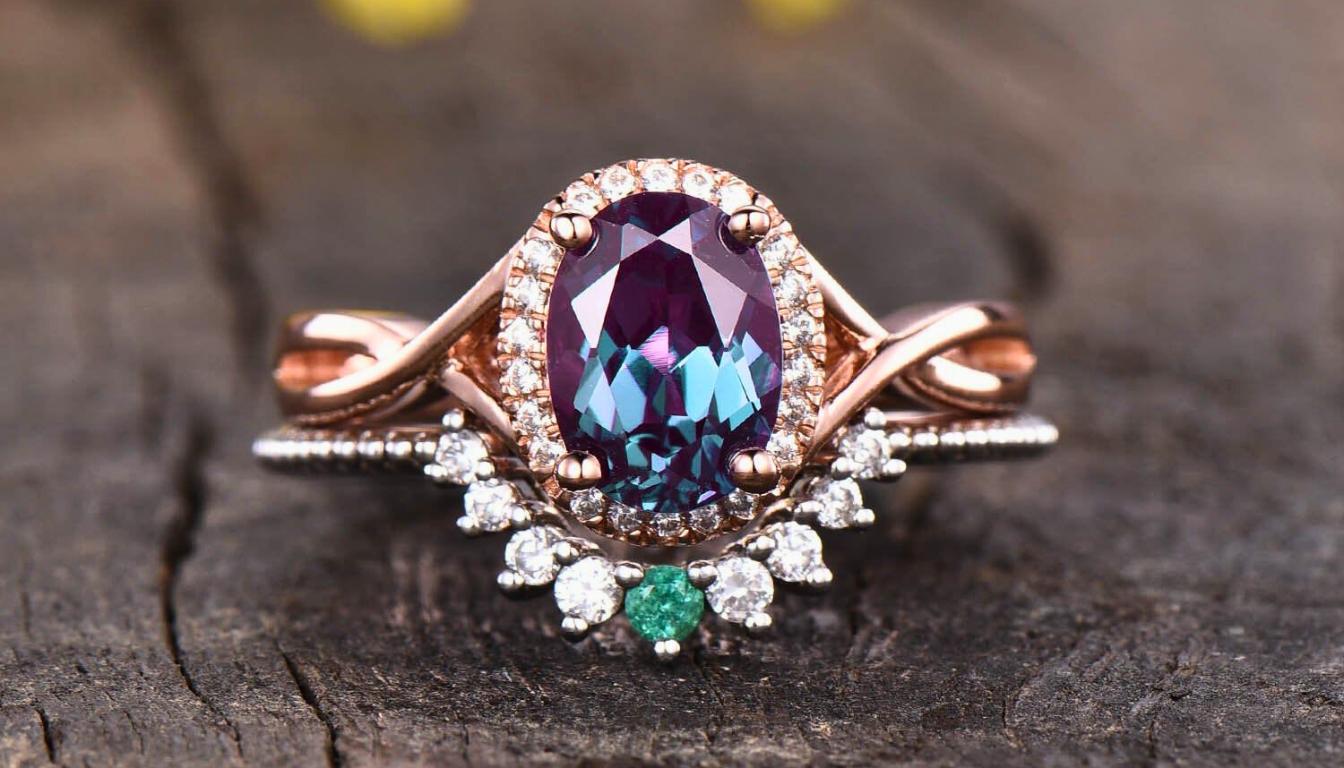
Fine alexandrite is often bluish green in daylight and reddish to purplish red under incandescent light. The effect relates to selective light absorption and the different spectral compositions of light sources. The stone is chrysoberyl, Mohs 8.5. Not every specimen shows the same intensity or beauty of change.
How color-change garnet compares
Certain garnet compositions also show changes between daylight and incandescent lighting, sometimes from greenish or bluish tones to purplish or reddish tones. The exact appearance varies by specimen. A garnet with this effect is still garnet, not synthetic alexandrite. A distinctive color shift may occur in other mineral species as well.

Color change versus pleochroism
Color change refers to viewing the gemstone under different light sources. Pleochroism refers to different colors observed when a gemstone is viewed along different crystal directions. Alexandrite may show both, but they are not the same mechanism. Photograph and compare the gem under defined lighting instead of turning on arbitrary colored LEDs and calling that a diagnostic test.
Hardness, toughness and wear
Alexandrite is approximately Mohs 8.5 and often suitable for carefully worn rings. Garnet hardness varies by species, generally below alexandrite. Nonetheless, fractures, inclusions and mounting design affect breakage. A good jeweler can protect exposed edges, and cleaning must account for any fillings or treatments.
Natural versus lab-grown alexandrite
Laboratory-grown alexandrite exists and can display a convincing color change. Commercial ‘alexandrite sapphire’ may also refer to lab-grown color-change corundum, not chrysoberyl alexandrite. The seller’s use of a dramatic color video does not prove natural origin or material identity. For costly stones, independent identification is essential.
Evaluating value without hype
Evaluate the strength and attractiveness of both daylight and indoor-light colors, clarity, cut, size, documented growth origin and treatment history. Avoid extrapolating exact prices from a generic chart because scarcity and market conditions change. Confirm that the report’s description matches the item on offer.
Interactive gemstone buying checklist
FAQs — tap to reveal answers
Is color-change garnet the same as alexandrite?
No. They are different minerals that can exhibit a related optical phenomenon.
Does color change prove the gem is natural?
No. Laboratory-grown and imitation materials may show similar effects.
Should both colors be evaluated?
Yes. Compare daylight and incandescent-light appearance in controlled conditions.
Editorial note: Identification, treatment and valuation claims require examination of individual gemstones. Cultural gemstone beliefs are not medical evidence.