Quick answer: Agate is chalcedony, a microcrystalline quartz material known for patterned bands and inclusions. Commercial agate is often dyed to create brilliant blue, pink, purple or black colors. Dyeing does not remove the stone’s quartz identity, but it changes what buyers should expect and how the item should be described.
Quick gemstone comparison
| Feature | Material A | Material B / context |
|---|---|---|
| Base material | Natural chalcedony | Usually natural chalcedony plus dye |
| Color | Varies geologically | Can be intensified or changed |
| Banding | May be visible | May also be visible |
| Care | Depends on specimen | Dye may add restrictions |
What natural agate can look like
Natural agate spans subtle grays, whites, browns, oranges, reds and other tones, with bands and patterned areas depending on its geological formation. Moss and dendritic trade varieties may look less obviously banded. No one color or pattern guarantees the stone is natural, untreated or from the location claimed by a seller.
How dyed agate is made and marketed
Because chalcedony can have porous or fracture-related areas, dyes may penetrate and intensify its color. Decorative slices and beads are commonly sold in bright artificial-looking hues. A dyed natural agate is still based on agate material, while glass or resin painted to resemble it is a separate type of imitation. Accurate product descriptions distinguish these cases.

Clues that may suggest dye
Strongly uniform electric color, more intense coloration along cracks or concentrated pigment near drill holes can prompt questions. However, none of those signs alone is conclusive. Natural colors can be vivid, and professionally dyed material can look relatively even. Treat observations as reasons to request disclosure rather than as proof for an accusation.
Comparison to glass and jasper
Glass can be molded or decorated to resemble banded stone. Jasper is typically opaque microcrystalline silica, and the trade boundaries of agate and jasper overlap. A specialist may use microscopy, refractive properties and other tools to investigate identity. Avoid home scratch or acid tests, which can damage finished jewelry.

Durability and cleaning
Agate usually rates around 6.5 to 7 Mohs, so it is more abrasion-resistant than fluorite but can still chip. Dyes and surface treatments may be sensitive to solvents, heat and aggressive cleaning. Use the seller’s care advice for the finished piece rather than assuming untreated quartz care applies to every colored item.
How to choose agate jewelry or display pieces
Ask whether the item is natural-color, dyed, coated, stabilized or composite. Compare actual photographs of the full piece, including cut edges and drill holes. Request dimensions, return terms and a clear statement of any claimed mining origin. Decorative dyed agate can be an excellent purchase when the price and treatment are transparent.
Interactive buying checklist
Frequently asked questions
Is dyed agate fake?
Not necessarily. It can be genuine agate that has been treated; the treatment should be disclosed.
Does bright blue prove dyeing?
No single visual observation proves it, though it is a useful question to ask.
Should I test agate with acetone?
No. Solvents may damage dye, coatings or other jewelry components.
More GemTycoon resources
Explore our related gemstone guide and the gemstone identification chart for more information.
Reference: Gemological Institute of America — educational gemology resource.
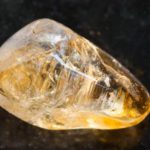
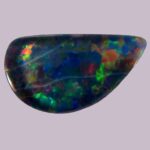
Editorial note: The photographs illustrate gemstone appearances; this article does not authenticate any individual specimen. No gemstone is presented as a medical treatment or guaranteed investment.