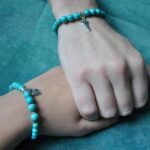
Stabilized turquoise is not the same as fake turquoise. It is turquoise that has been treated, usually with a stabilizing substance, to increase durability or improve usability in jewelry. Untreated natural turquoise, stabilized turquoise and dyed imitation materials should be described separately.
What makes turquoise naturally variable
Turquoise is a hydrous copper-aluminum phosphate mineral that ranges from sky blue to green. Differences in porosity, texture, color and matrix influence its appearance and suitability for polishing. Some natural specimens are relatively compact and hard enough for cutting, while lower-grade material can be porous or crumbly and may require treatment to withstand normal jewelry use.
How stabilization generally works
Stabilization often involves impregnating porous turquoise with a polymer or other substance to improve cohesion and polishability. This does not mean every stabilized stone contains the same resin, or that all treatments are equally durable. Ask what is known about the procedure; even knowledgeable sellers may not have a precise manufacturing record for older jewelry.
Untreated does not automatically mean superior-looking
A fine untreated turquoise stone may command a premium because desirable stable material is comparatively limited. Yet an untreated low-grade specimen can be fragile and visually unappealing. Stabilized turquoise may offer an attractive and practical choice for daily accessories. Always weigh color, surface quality, matrix, price and honest treatment disclosure.
Stabilized, dyed and reconstructed are different
Stabilization strengthens porous material; dyeing changes appearance; reconstituted or composite turquoise includes smaller fragments or powdered material bound into a product. Dye and resin can appear in the same item. Buyers should ask whether they are purchasing intact turquoise, a treated stone or a composite, rather than assuming the label ‘genuine’ fully explains construction.
What affects price and desirability
GIA emphasizes turquoise’s color, texture and matrix; provenance and untreated status may influence certain collector markets. A famous mine name printed on a tag is not proof of geographic origin. Price charts without documentation cannot establish a particular specimen’s value. Compare items with similar disclosure, size, surface quality and retailer support.
Cleaning and preventing damage
Turquoise may absorb cosmetics, perfume or cleaning agents, and heat or solvents can discolor or damage treated pieces. GIA recommends warm soapy water rather than steam or ultrasonic cleaning. Wipe gently after wearing, remove jewelry before applying fragrances and store it away from hard gems. Do not test stability with chemicals at home.
Buyer checklist
- Ask for the gemstone’s exact mineral identity and whether it is natural, laboratory-grown, or an imitation.
- Request known treatments and care restrictions in writing.
- Inspect photographs under neutral lighting and compare complete dimensions.
- Check whether a credible independent gemological report is appropriate to the price.
- Keep a receipt and understand the return policy before paying.
Frequently asked questions
Can photographs prove that a gemstone is natural?
No. Photographs can reveal appearance, not confidently establish mineral identity, growth origin or treatment history.
Do treatments always make gemstones fake?
No. Natural stones may be treated. Known treatments should be disclosed separately from natural origin.
Is a home scratch or chemical test recommended?
No. Such tests can damage gems and provide incomplete answers.
Related GemTycoon resources
Evidence and further reading
- Gemological Institute of America — relevant gemology guide or research
- GIA — How colored stones are analyzed
Educational content. Photographs and general comparisons are not laboratory identifications or appraisals.