October has two established birthstones: opal and tourmaline. Opal is admired for optical play-of-color, while tourmaline offers an extraordinary range of hues. Choosing between them is best approached through appearance, practicality, durability and care rather than supernatural promises.
The difference between opal and tourmaline
Opal is hydrated silica. Precious opal can show rainbow-like flashes created by interactions between light and internal silica structures. Common opal has different visual qualities and may not show play-of-color. Tourmaline is a separate family of borosilicate minerals, prized for pink, green, blue and multicolored varieties. Both are associated with October, but neither has one required ‘birthstone color’.
October opal: what buyers should look for
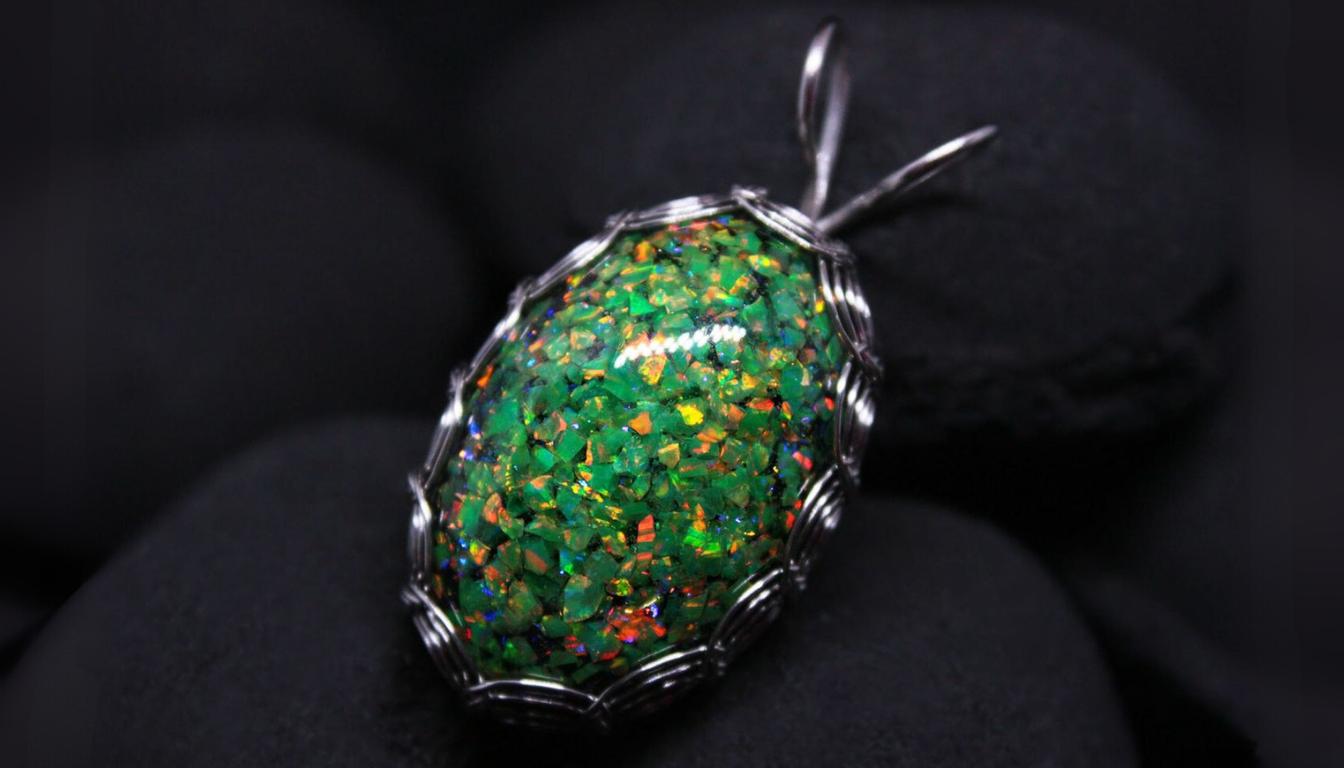
Evaluate play-of-color, brightness, distribution, background hue and whether the gem is a natural solid opal or an assembled doublet or triplet. Black, white, crystal and boulder opals differ in appearance. Doublets and triplets incorporate a genuine opal layer with additional materials, and should be clearly disclosed. GIA explains opal grading factors but does not issue a generic numeric colored-stone grade.
October tourmaline: more than pink
Pink tourmaline is often shown in birthstone jewelry, but tourmaline occurs in green, blue, red and other hues. Some specimens display two or more colors. Quality depends on the stone’s saturation, clarity, cutting and overall appearance. Look at it under neutral lighting: very dark tourmaline can lose brilliance, and different cutting orientations may affect how its color appears.
Durability comparison
Opal generally rates about 5 to 6.5 on Mohs, while tourmaline commonly rates about 7 to 7.5. Higher hardness offers greater scratch resistance but does not prevent chipping. Some opals can suffer from sudden temperature changes and require care against impacts. Tourmaline should also be protected from abrupt thermal stress and hard knocks. Earrings and pendants expose vulnerable gems to fewer blows than daily rings.
Birthstone meaning versus proven properties
Historical accounts connect opal with hope, luck and creativity, while popular modern descriptions connect pink tourmaline with affection and compassion. These are symbolic traditions, not scientifically proven medical or psychological treatments. Gifts can celebrate those stories without suggesting a stone cures anxiety, changes relationships or improves physical health.
Buying and caring for October gems
Ask whether opal is solid or assembled and whether any treatments are known. For tourmaline, obtain the correct mineral description, size and treatment disclosures. Gently clean suitable items with warm, mild soapy water according to the jeweler’s advice and avoid harsh steam or ultrasonic cleaners when uncertain. Store the gems separately and remove delicate rings before strenuous work.
Practical buyer checklist
- Confirm the exact gemstone species or material, not just a color or trade nickname.
- Ask whether the item is natural, laboratory-grown, treated or assembled.
- Inspect the condition, size and treatment disclosures.
- Seek independent laboratory verification when significant value depends on identification.
- Check the return and cleaning policies before purchase.
Frequently asked questions
Can a photo alone prove this gemstone’s identity?
No. Different minerals and imitations can look similar, particularly after cutting and polishing.
Does natural mean untreated?
No. Some naturally formed gems are dyed, heated, filled or otherwise modified.
Is a scratch test safe for home identification?
No. Deliberate scratching can permanently damage valuable stones or settings and does not resolve many origin questions.
Explore related articles
References
Educational guidance, not an appraisal, medical claim or laboratory assessment.