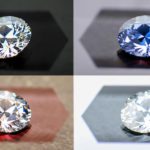
When you ask whether a gemstone is real, first clarify what the seller claims it is. A lab-grown sapphire is sapphire, but a piece of blue glass labeled sapphire is an imitation. Natural stones may also have received treatments. No single photograph, scratch test or online trick can establish all these facts.
Start by defining the seller’s claim
Write down the exact gem species, claimed natural or laboratory-grown origin, treatment status, carat weight, measurements and any origin statement. A listing that simply says ‘genuine crystal’ gives very little information. A natural ruby and a laboratory-grown ruby may both be genuine corundum, but their disclosure and pricing should differ. For an inexpensive decorative stone, basic transparency may be sufficient; for a valuable engagement ring, request independent documentation.
Use lighting and magnification as observation tools, not proof
Examine a clean gem in indirect daylight and steady neutral lighting. Look for color zoning, growth features, fissures, chips, bubbles and irregularity. A 10× jeweler’s loupe can reveal details, but inclusions alone cannot establish natural origin: laboratory-grown gems can also have internal features. The absence of visible inclusions does not mean the stone is fake. Photograph the stone from several angles and record anything that differs from the seller’s pictures.
Know why common home tests fail
Avoid scratching glass, cutting with a knife, exposing a stone to flames, applying acids or dropping it into water. Such demonstrations can cause permanent damage and often do not distinguish materials with similar physical properties. Weight and coolness to the touch also overlap between minerals and are affected by size and ambient temperature. A simple UV light reaction is not a decisive authenticity test, either.
Check the setting and marketing language
Inspect the listing for exact materials, the stone’s dimensions and whether the jewelry is plated, filled, reconstructed or assembled. ‘Blue emerald’, ‘natural opalite’ and ‘unheated’ should prompt specific questions rather than automatic trust. A clear return policy, photographs of the actual item and a matching receipt are practical signs of a transparent business—but not laboratory authentication.
Use a professional identification report for meaningful purchases
A trained gemologist may measure refractive index and inspect optical features, while specialist laboratories can use spectroscopy and other methods to determine identity, detectable treatments and, in some cases, growth origin. Check the issuing lab’s credentials and verify that a report’s identifying details match the physical stone. An appraisal of monetary value does not automatically establish mineral identity.
Follow an evidence-based purchase checklist
Before committing to a costly gem, ask in writing: What is it? Is it natural or lab-grown? Has it been heated, dyed, filled or otherwise enhanced? Does an independent report verify these claims? Can the seller supply the report number and a reasonable return policy? If the response changes or relies only on an attractive picture, step away rather than try destructive home tests.
Related GemTycoon guides
Frequently asked questions
Does a real gemstone always have inclusions?
No. Many natural stones show inclusions, but some are remarkably clean and lab-grown stones can have inclusions too.
Can a phone app identify a gemstone?
An app can suggest possibilities from a photo; it cannot reliably establish mineral identity, treatment or growth origin.
Are lab-grown gemstones fake?
Lab-grown versions of a named gem share the relevant mineral identity; an imitation made of a different material does not.
Sources and further reading
Editorial note: General educational guidance is not a gemological laboratory identification or valuation of a specific specimen.