Two similar names. Two different materials.
Compare the real specimens below, choose what matters to you, and keep a practical checklist beside you when you shop.
Try the quick check · Open the FAQsThe main difference between opal and opalite is the material. Natural opal is hydrated silica formed in the earth. The milky, blue-glowing material usually sold as opalite in bead and crystal shops is manufactured glass. Their similar names do not make them the same gemstone.
This opal vs opalite guide compares appearance, value and care, and explains which clues are useful when you shop. Here, “opal” means natural opal and “opalite” means the common glass product unless stated otherwise.
What matters most to you?
I want a naturally formed gemstone
Start with identified natural opal. Ask whether it is solid, treated or assembled, and compare the individual stone. Explore natural opal.
I want the luminous look at an accessible price
Clearly labelled opalite glass may fit your goal. Compare the design, finish and setting rather than paying a premium for a claim of natural rarity. Look at opalite glass.
I already own a stone and want to identify it
Use the clues in this guide to frame questions, then seek a gemologist if identification matters. A picture, price or blue glow cannot settle every case. Start with the identification checklist.
Opal vs opalite: quick comparison
| Feature | Natural opal | Opalite glass |
|---|---|---|
| Origin | Naturally formed | Manufactured |
| Material | Hydrated silica | Opalescent glass; recipes vary |
| Appearance | Precious opal has shifting color flashes; common opal does not | Often milky and translucent, with a blue or warm glow depending on lighting |
| Structure | Amorphous, rather than a conventional crystal | Glass, rather than a natural crystal |
| Buying category | Natural gem; ask about treatments and assembled stones | Decorative glass; ask for clear material disclosure |
| Value | Varies widely with the individual stone | Usually an affordable jewelry or craft material |
| Best reason to choose it | Natural origin and the individual specimen’s appearance | The luminous look, design and accessible price |
What is opal?
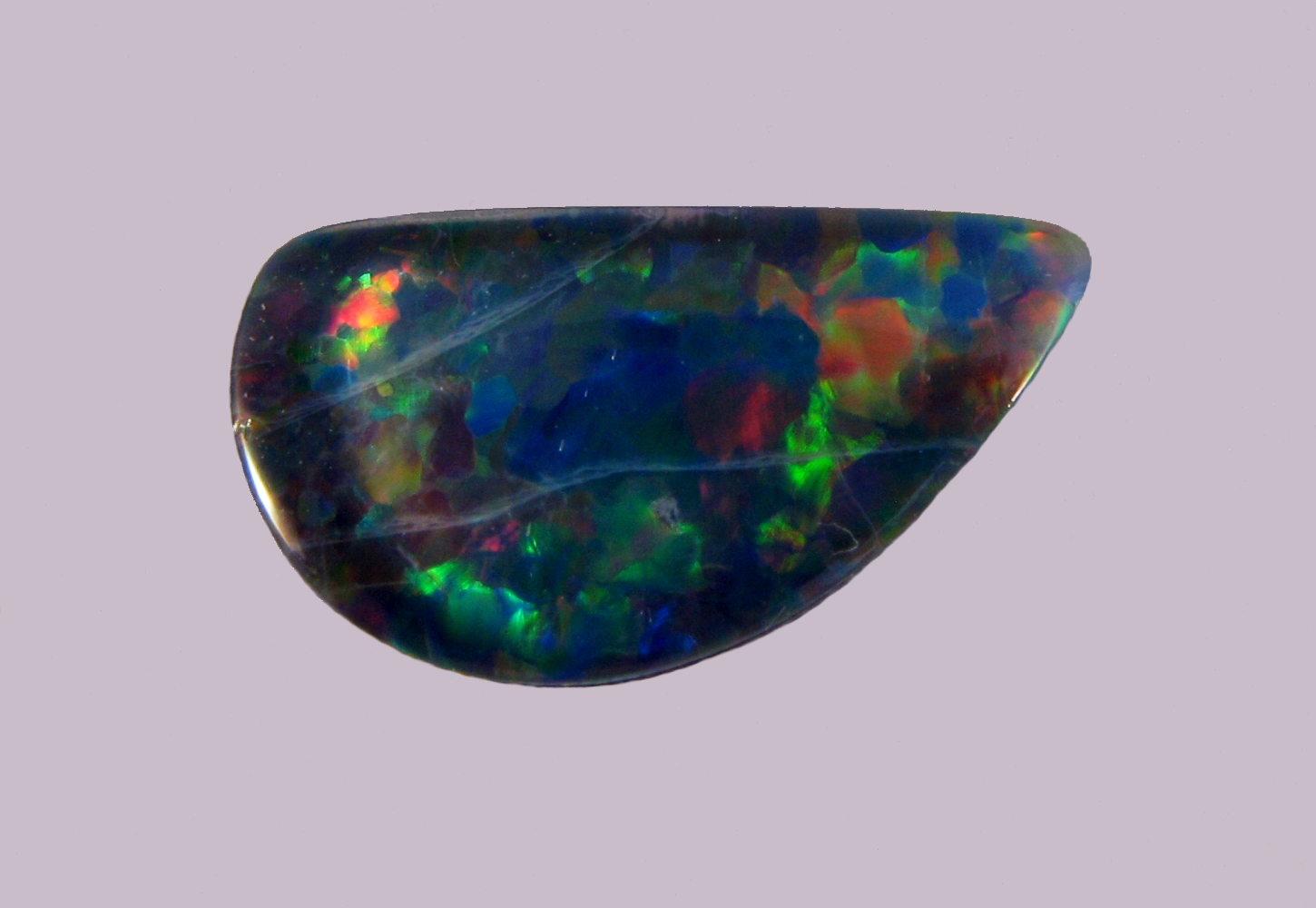
Opal is a natural gem made of silica and water. In precious opal, an ordered arrangement of tiny silica spheres produces shifting flashes called play-of-color. Common opal lacks that effect, so a stone without rainbow flashes is not automatically imitation. GIA’s opal overview explains the material and its optical effect.
Natural opal comes in many appearances. Our guides to green opal and dendritic opal cover two other examples. The identifying question is what a specimen is made of, rather than whether it resembles a particular photograph.
What is opalite?
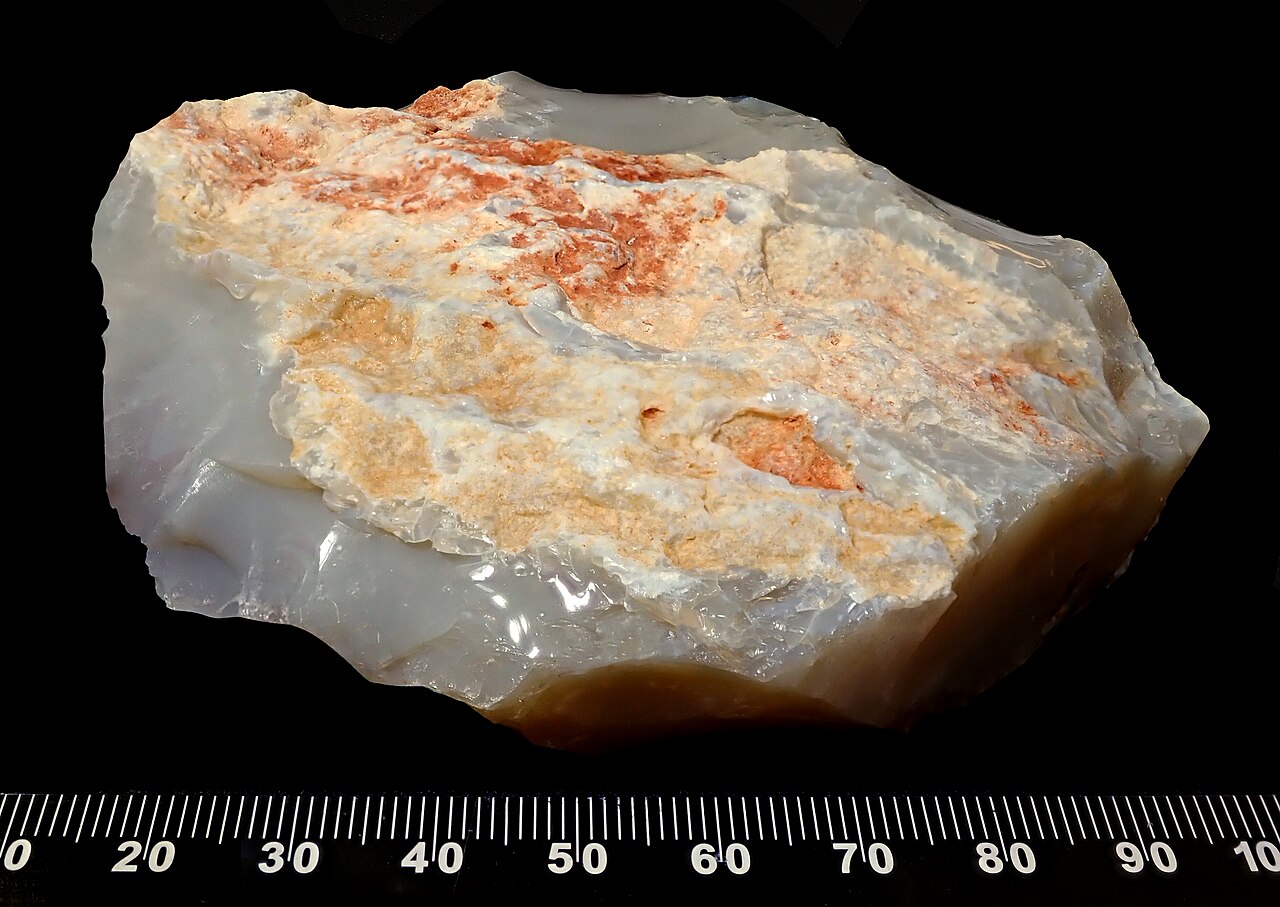
In modern jewelry and crystal retail, opalite usually means manmade opalescent glass. It is cut or shaped into beads, pendants and decorative pieces. The term has also been used for some natural opal-bearing materials, which is why a seller’s written description matters. The photographed example below is identified by its source as manufactured glass.
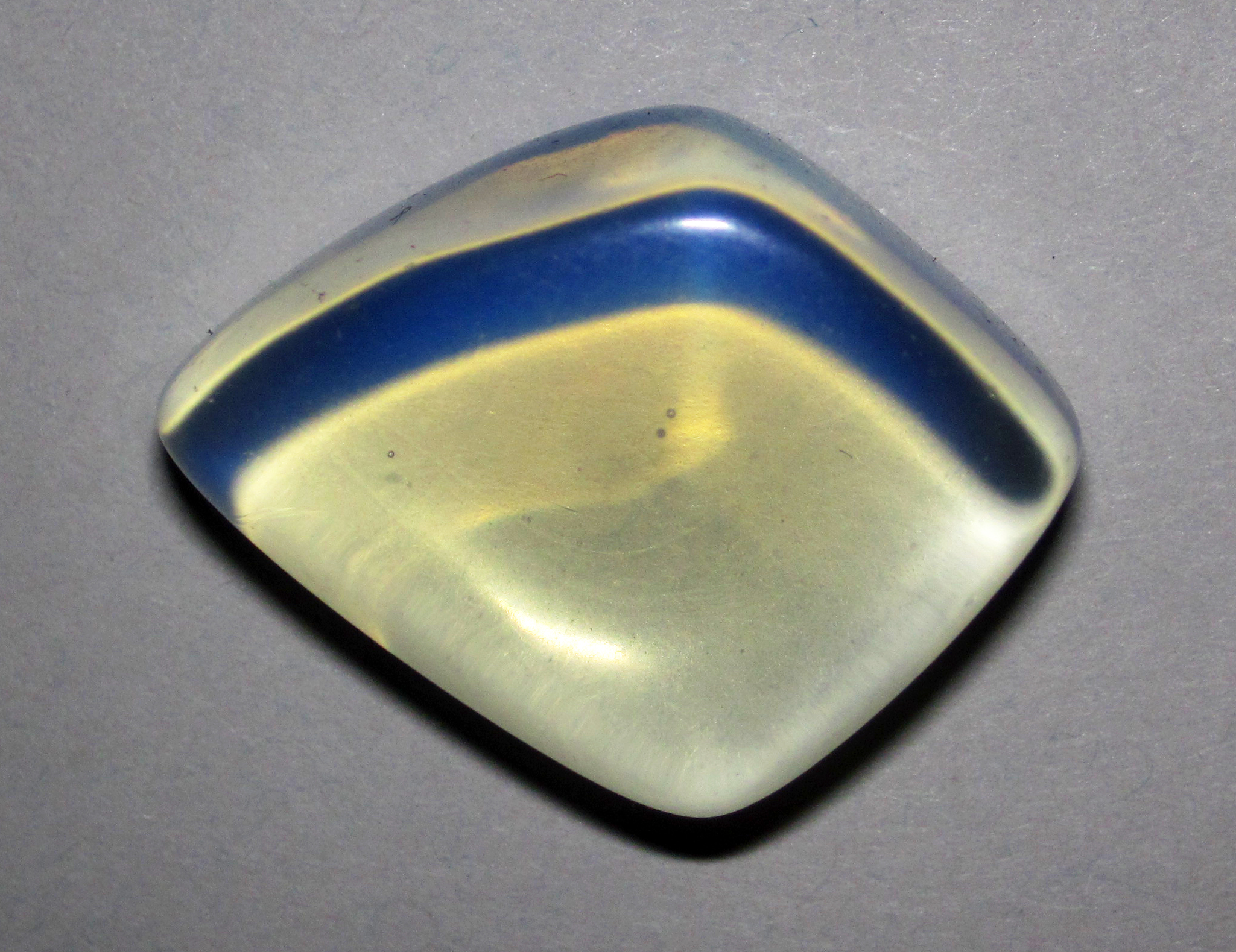
For its production, practical uses and symbolic meanings, see our opalite crystal guide. A trade name alone does not tell you whether a particular item is glass, natural opal or another material.
How to tell opal and opalite apart
Start with the seller’s disclosure, then use appearance as a clue. Home observations can help you ask better questions, but they cannot authenticate every stone.
- Read the material description. Look for “natural opal,” “laboratory-created opal,” “opal doublet/triplet,” or “opalite glass.” These describe different products.
- Look at the light effect. Precious opal shows patches of spectral color that change as it moves. Common opal may not. Opalite glass often has a more diffuse blue-white appearance, with warmer tones in transmitted light.
- Check the whole item. Request a side view as well as the front. A backing or cap may indicate an assembled stone, rather than a solid piece.
- Treat uniformity and bubbles as clues, not verdicts. A photograph or one visual feature is insufficient to establish natural origin.
- Use a gemologist for a valuable purchase. Ask for an identification report when the price or claim warrants one. Avoid scratch, flame and chemical tests that could damage the item.
Opalite, synthetic opal, doublets and triplets
Synthetic gem materials are made by people and reproduce the essential properties of their natural counterparts. Ordinary opalite glass is an imitation material, not another name for synthetic opal.
An opal doublet has an opal layer attached to a backing; a triplet adds a transparent cap. Both can contain natural opal, but neither is a single solid opal. Gem-A’s guide to opal types explains these constructions. Ask what you are buying before comparing prices.
Opal vs opalite value: what should you pay for?
There is no useful universal price for either name. Compare the actual material, size, finish and jewelry setting. A carefully made opalite pendant can cost more than a small, low-grade natural opal; the price of a finished piece also includes craftsmanship and metal.
If you want a natural gemstone, prioritize identification and an accurate description. If you want an inexpensive luminous accessory, openly described opalite glass can be a sensible choice. Do not pay a natural-gem premium merely because a listing says “rare opalite” or “healing crystal.”
How to care for opal and opalite
GIA gives opal a hardness of 5–6.5 on the Mohs scale and notes its sensitivity to high heat and sudden temperature changes. Its care guide recommends warm, soapy water. Protect opal from knocks and follow specific advice for treated or assembled jewelry.
For an opalite piece, follow the maker’s instructions for the glass, any coating, adhesive and setting. A gentle wipe with a soft cloth is a sensible starting point. Avoid dropping it, testing it with a flame or assuming that a manufactured material is unbreakable.
Pause, choose, then reveal
Think of your answer first, then open each card to check your reasoning.
A stone has no rainbow flashes. Must it be opalite?
No. Common natural opal can lack play-of-color. That observation alone cannot identify the material.
Does “manmade” always mean synthetic opal?
No. Opalite glass is a different material from laboratory-created opal. Ask for the actual material, not just the trade name.
Is an expensive opalite pendant necessarily mislabeled?
No. The price can include design, metal and craftsmanship. The important point is honest disclosure of the glass.
Opal vs opalite FAQs
Is opal the same as opalite?
Usually, no. In a typical modern jewelry listing, opalite is glass and natural opal is a different material. Because the name has other uses, ask the seller to identify the item explicitly.
Is opalite a real crystal?
The common glass product is real as a manufactured material, but it is not a natural mineral crystal. “Opalite crystal” is a retail phrase, not a guarantee of crystalline structure.
Does opalite glow in the dark?
Its luminous appearance under a light source is not evidence that it produces light in darkness. Do not mistake a bright blue sheen against a dark background for glow-in-the-dark behavior.
Is opalite an October birthstone?
Opal is an October birthstone. An opalite-glass gift may imitate its appearance, but it should be described as an alternative rather than natural birthstone opal.
Which should I choose?
Choose an accurately identified natural opal if natural origin is important to you. Choose clearly labeled opalite glass if you enjoy its appearance and price. For either, judge the specific piece and its disclosure rather than the name alone.