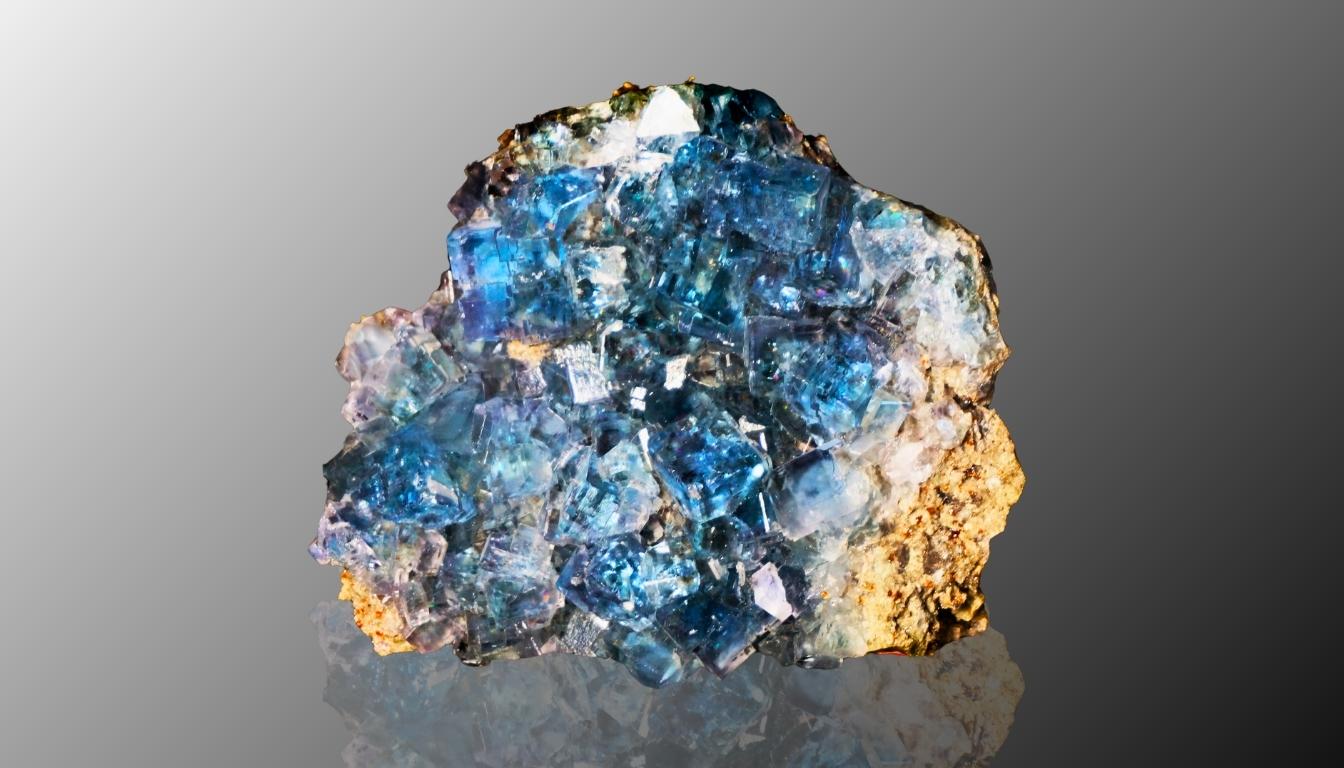
Fluorite and amethyst can both be purple and visually appealing, but they belong to different mineral species. Fluorite is calcium fluoride (CaF2), while amethyst is the purple quartz variety (SiO2). Knowing the difference helps collectors buy accurately and jewelry wearers choose stones suited to their habits.
Fluorite vs amethyst at a glance
| Feature | Fluorite | Amethyst |
|---|---|---|
| Composition | Calcium fluoride | Silicon dioxide |
| Mohs hardness | 4 | 7 |
| Common hues | Purple, green, blue, yellow, colorless | Primarily purple |
| Typical natural crystal shapes | Often cubic | Often hexagonal prisms |
| Breakage feature | Excellent cleavage | Conchoidal fracture rather than fluorite-like cleavage |
Appearance and color zoning
Amethyst is typically violet or purple quartz, with some examples displaying reddish or bluish purple. Fluorite occurs in an especially broad range of colors and sometimes in multicolored bands or zones. A digital photograph cannot reliably distinguish the minerals because lighting changes hue and polishing removes some of the original crystal-shape clues.
How crystal structure can help
Natural fluorite often develops cubic crystal shapes and can break along well-defined octahedral cleavage directions. Quartz commonly produces hexagonal-prism crystals with pointed terminations. However, tumbled beads and faceted stones no longer show the original crystal outline. A chipped specimen is not a reason to damage it further just to examine cleavage.
Why the hardness difference matters
Fluorite is Mohs 4 and can scratch more easily with normal use. Amethyst is Mohs 7, providing greater resistance to abrasion, though it can still crack or chip. Fluorite is generally less suited to a ring worn through physical work. Hardness is not toughness: GIA explains that resistance to breaking and stability matter too.
Does UV fluorescence reveal fluorite?
Some fluorite specimens fluoresce under ultraviolet light, but many do not produce a strong visible response, and other minerals can fluoresce. The result depends on specimen composition and viewing conditions. A single blacklight response is not proof that a stone is fluorite, natural, authentic or from a certain mining locality.
Safe care and identification
Avoid destructive scratch, chemical or heating tests. Protect fluorite from impact and contact with harder stones; use gentle cleaning recommended for the specific piece. When the stone is valuable or identification is uncertain, ask a mineralogist or gemologist to assess multiple characteristics. Store amethyst and fluorite separately from diamonds and sharp jewelry hardware.

Which stone should you buy?
Amethyst can be preferable for purple jewelry requiring somewhat better surface durability. Fluorite can be an excellent mineral collection specimen, especially when its color zoning or cubic crystal habit is visible. Neither mineral has proven medicinal powers. Explore fluorite varieties and our chevron amethyst article, treating traditional crystal-healing language as belief rather than established science.
FAQs
Is purple fluorite a type of amethyst?
No. They are distinct mineral species.
Which is harder?
Amethyst rates Mohs 7; fluorite rates Mohs 4.
Are all purple crystals amethyst?
No. Many mineral species can appear purple.